Current status
liveDegraded
Generated Jun 04, 05:57 PM UTC from the public web app, API health, database, worker freshness, and dogfood monitor signals.
Operational proof
Current status
Generated Jun 04, 05:57 PM UTC from the public web app, API health, database, worker freshness, and dogfood monitor signals.
Dogfood checks
24hself-monitoringNo 24h data
No production self-check results have been recorded in the last 24 hours.
Proof boundary
claimconstrainedProduct evidence, not logos.
Luota is pre-customer. This page uses demo, dogfood, deploy, and product evidence instead of invented testimonials, borrowed logos, or implied compliance claims.
Demo workspace packet
The packet is deliberately constrained: it lets a technical buyer inspect product surfaces and operating discipline without pretending there is external adoption.
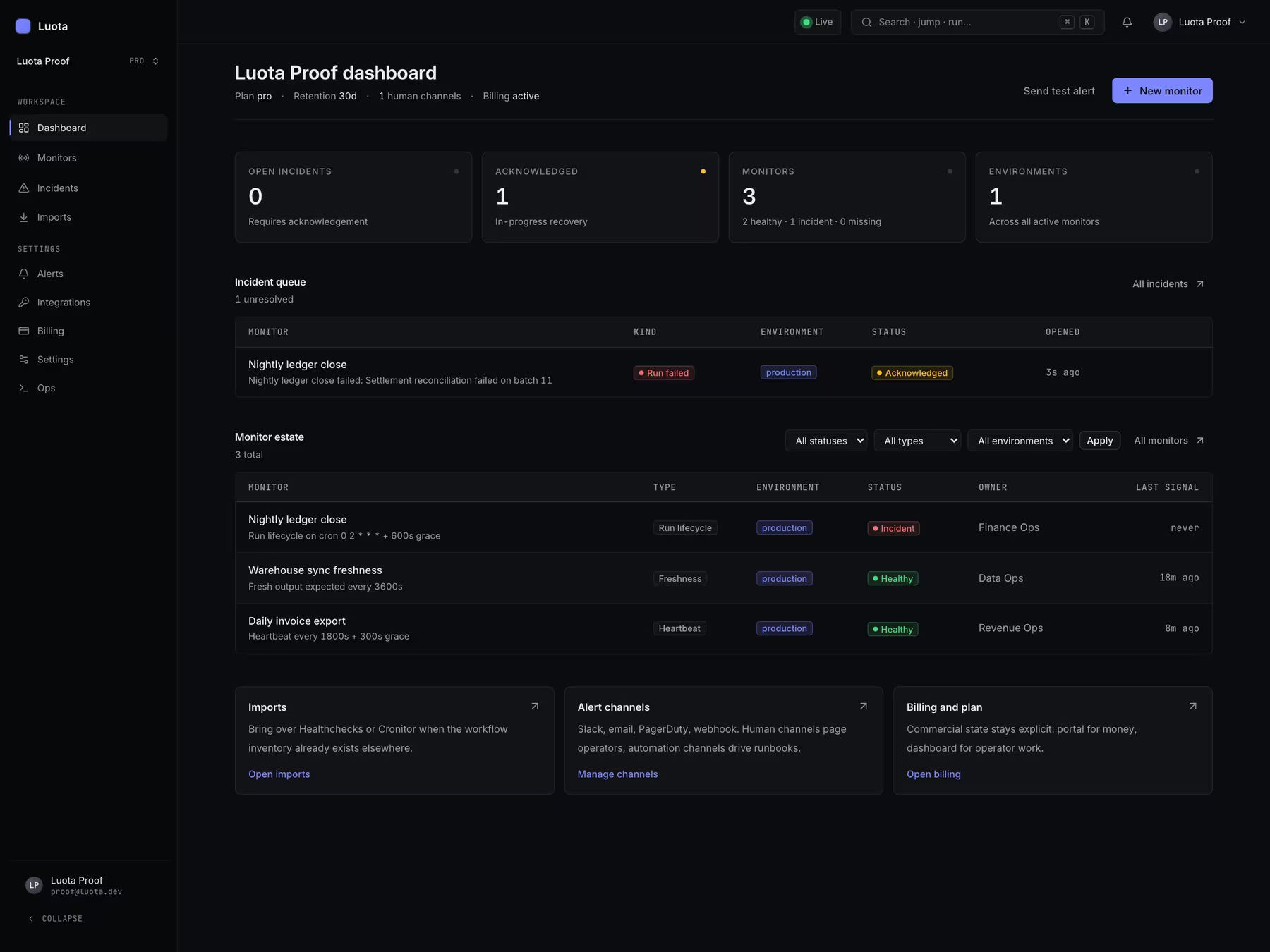
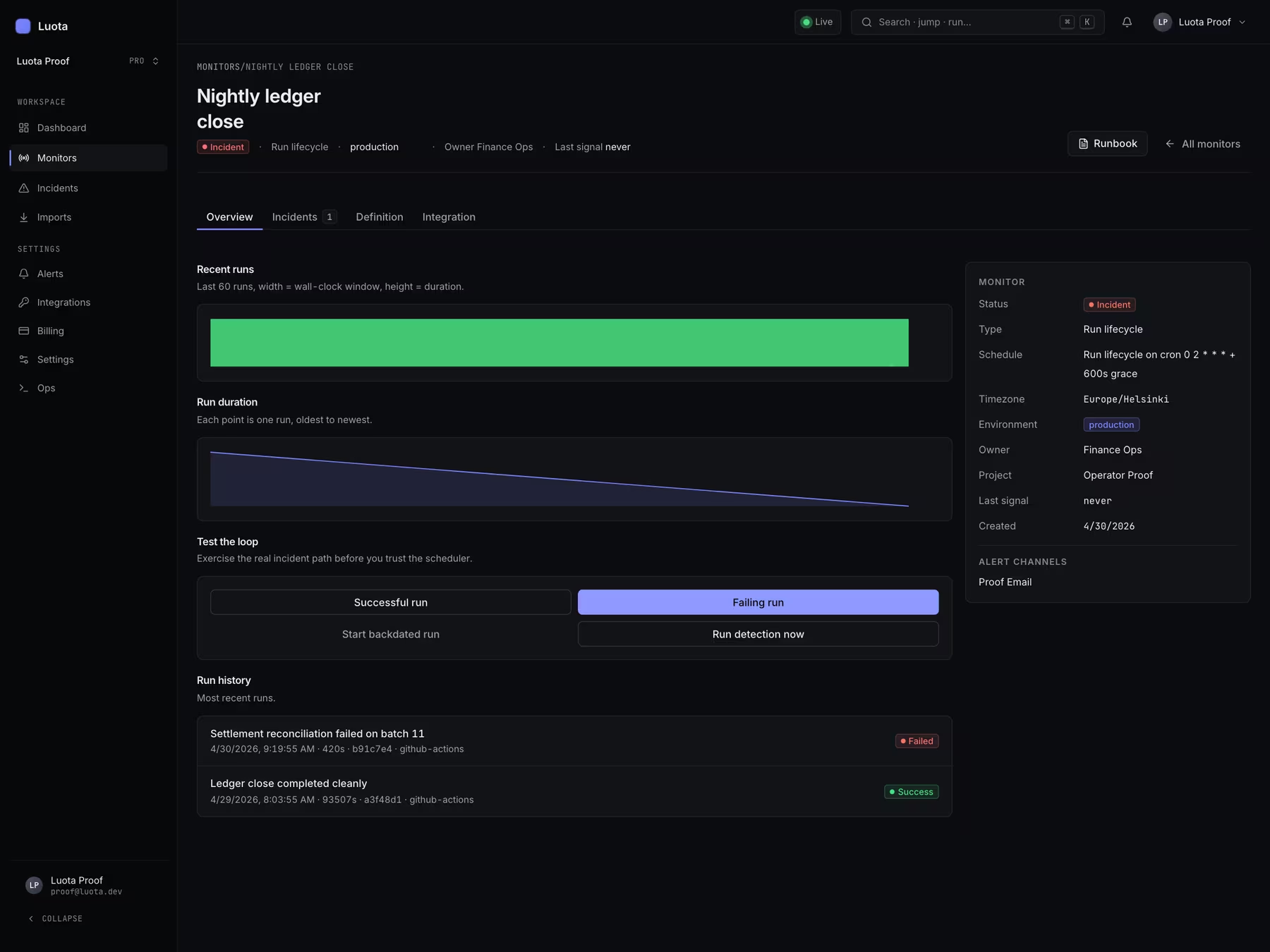
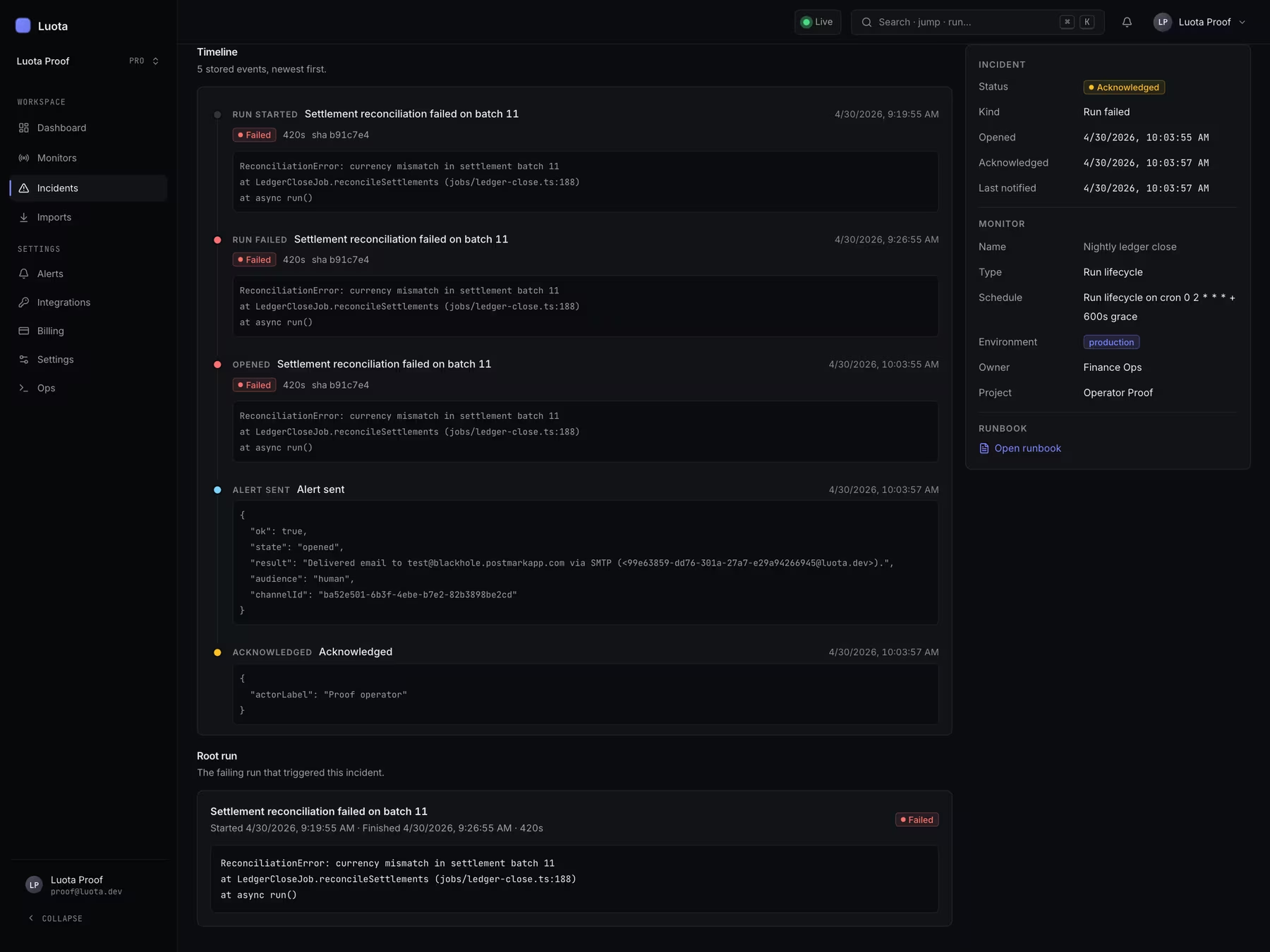
Demo workspace
Scrubbed demo workspace screenshots
Not customer proof
Shows product capability only. It is not a testimonial, logo, SLA, or adoption claim.
Controlled failure drill
Billing-sync failure drill narrative and incident capture
Bad-day path
Demonstrates the incident shape. Real customer failures will have their own payloads, owners, and runbooks.
Self-monitoring
Live status page, readiness checks, and Luota dogfood monitors
Operational proof
Launch-era self-monitoring, not a third-party uptime SLA or long historical guarantee.
Trust surface
Pricing, billing trust panel, security/privacy matrices, docs quickstart
Buying path
Current plans and controls are explicit. No SOC 2 or enterprise support claim is implied.
Evidence table
These are operational checks, not marketing claims. Each row maps to either the public status surface or the deploy verification path.
Public site
15 min
Marketing surface responds and renders.
API readiness
15 min
Readiness endpoint reaches the app, API, database, and worker signal.
Billing webhook
Deploy + cadence
Stripe webhook path is checked in deploy verification and production self-monitoring.
Product smoke
Deploy
Incident lifecycle, billing, backup freshness, and Lighthouse budgets must pass before a runtime deploy is accepted.
Internal incident walkthrough
This is internal operational evidence, not a customer case study. It shows the incident shape Luota is built to create.
01 / Expected signal
billing-sync should start every 15 minutes and close only after entitlement state is updated.
02 / Missed signal
The 14:15 UTC run did not arrive inside the grace window.
03 / Incident opened
Luota created one incident with the monitor, owner label, last good run, expected time, and alert path.
04 / Operator context
The incident included run history, payload tags, deploy SHA, and the runbook pointer needed to decide whether retry was safe.
05 / Resolution
The workflow recovered after the upstream retry path completed. The incident was closed with the recovery note attached.
Inspection checklist
This checklist is the public version of the same activation path inside onboarding. The product should be judged by whether each object is visible and useful.
01 / Promise
The monitored workflow has an expected window and owner path.
02 / Signal
The job sends heartbeat, run lifecycle, or freshness evidence from the work itself.
03 / Drill
A skipped, failed, or late signal creates one incident instead of a quiet dashboard.
04 / Evidence
The incident keeps run history, payload/output context, alert route, and runbook pointer together.
05 / Handoff
The operator can acknowledge, recover, resolve, and retain the history for later review.
Product screenshots
Self-monitoring
The public site, readiness endpoint, billing webhook path, and production self-checks are watched with the same monitor model customers use. The live status page exposes current state and recent self-monitoring signals.
Deploy gate
Deploy verification checks health, web rendering, API smoke, incident lifecycle, billing, backup freshness, and Lighthouse budgets before a production runtime deploy is treated as complete.
Current limit
Luota does not claim SOC 2, years of public uptime history, a formal SLA, or a large customer base. Confidence should come from visible product evidence, scripted operations, and clear disclosure paths.
Buyer evidence
Screenshots and the demo workspace show monitor setup, run history, payload context, incident timelines, alert paths, and runbook links so a technical buyer can inspect the real workflow before signup.
Need a concrete migration or monitoring pattern? Start with the docs, then adapt the payload to the evidence your operator needs.
Open integration docs